Kartograme
Maps of Ancient Mythology in Myriorama
Maps of Ancient Mythology in Myriorama
Couldn't load pickup availability
Cards of Ancient Mythology in Myriorama
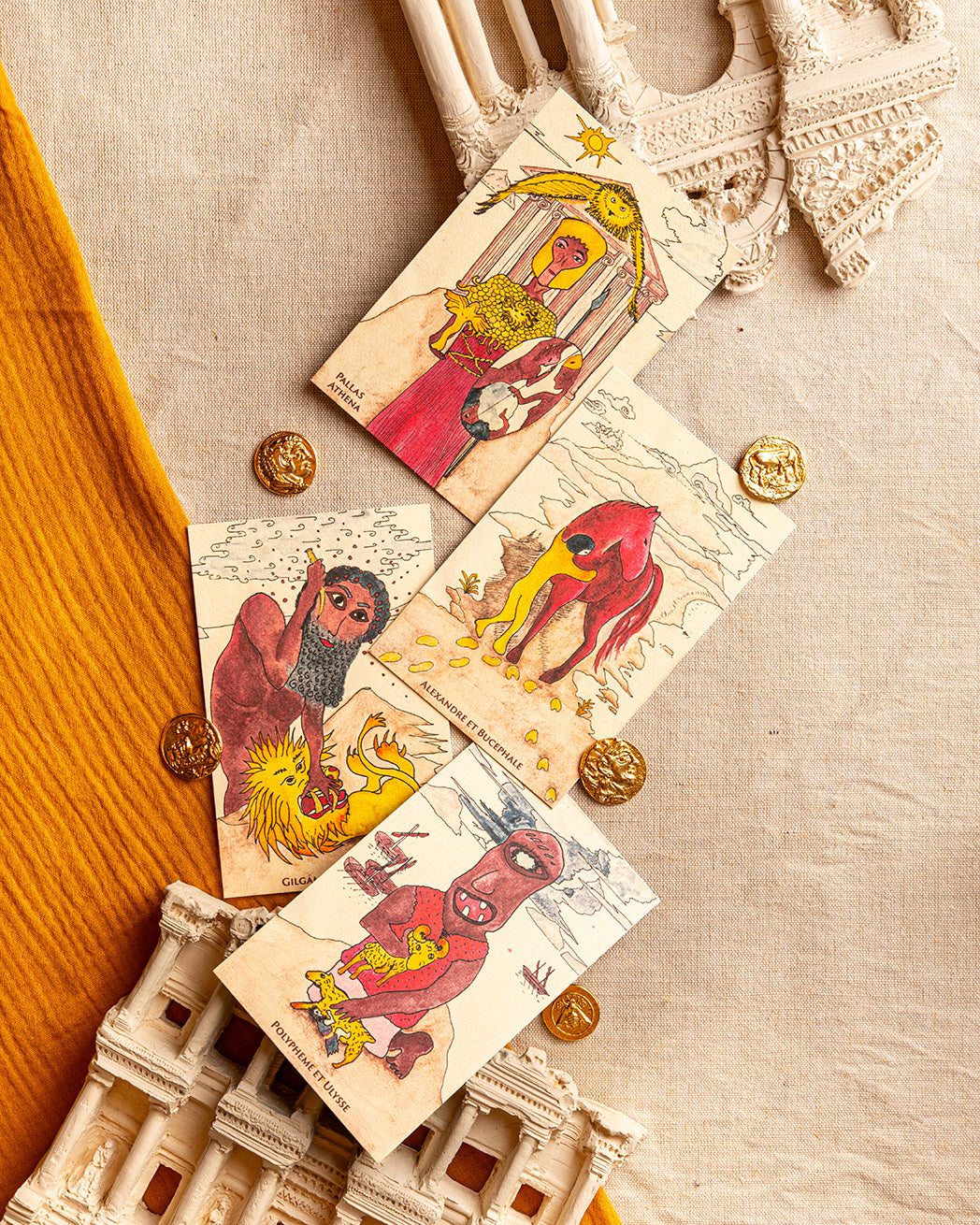
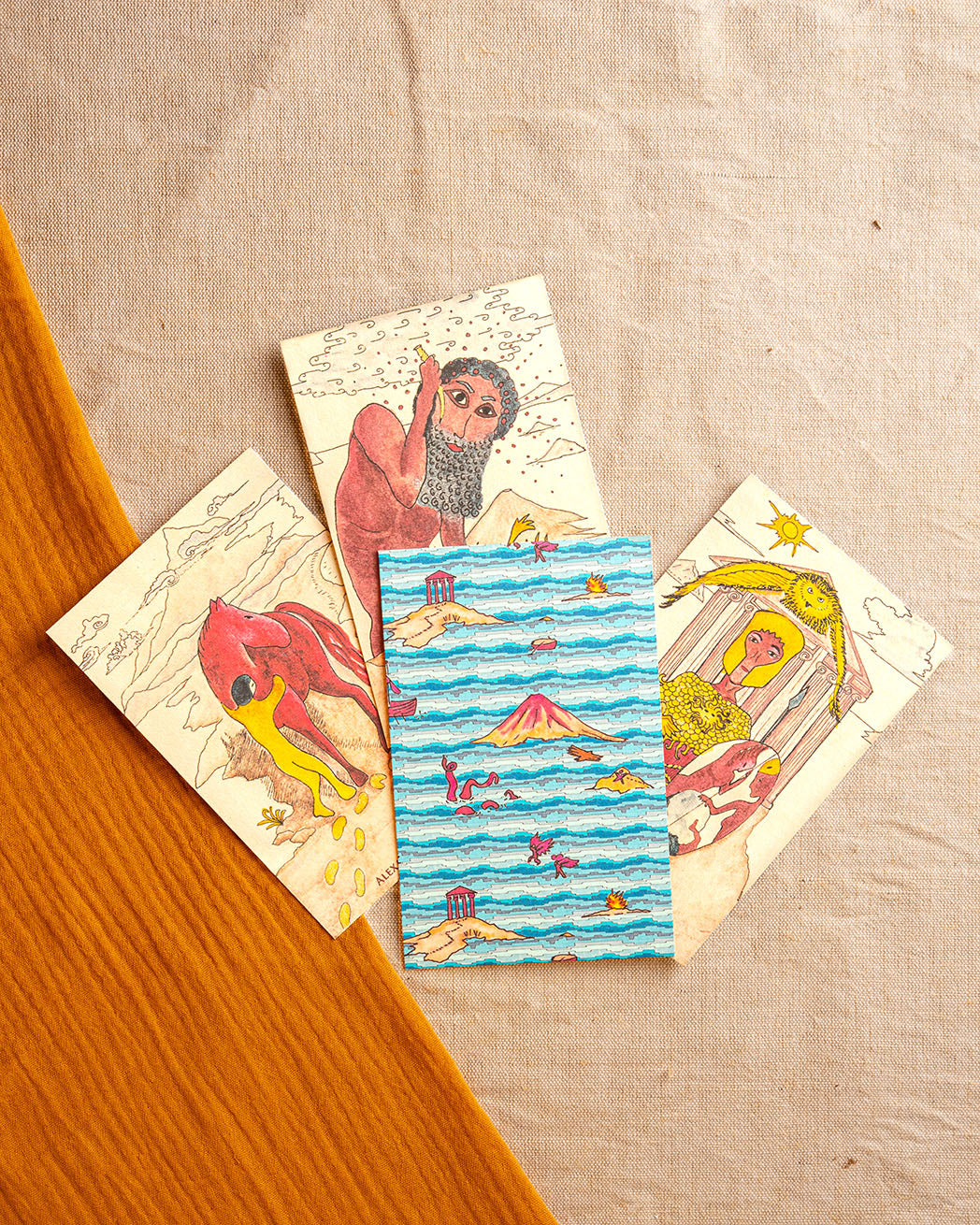
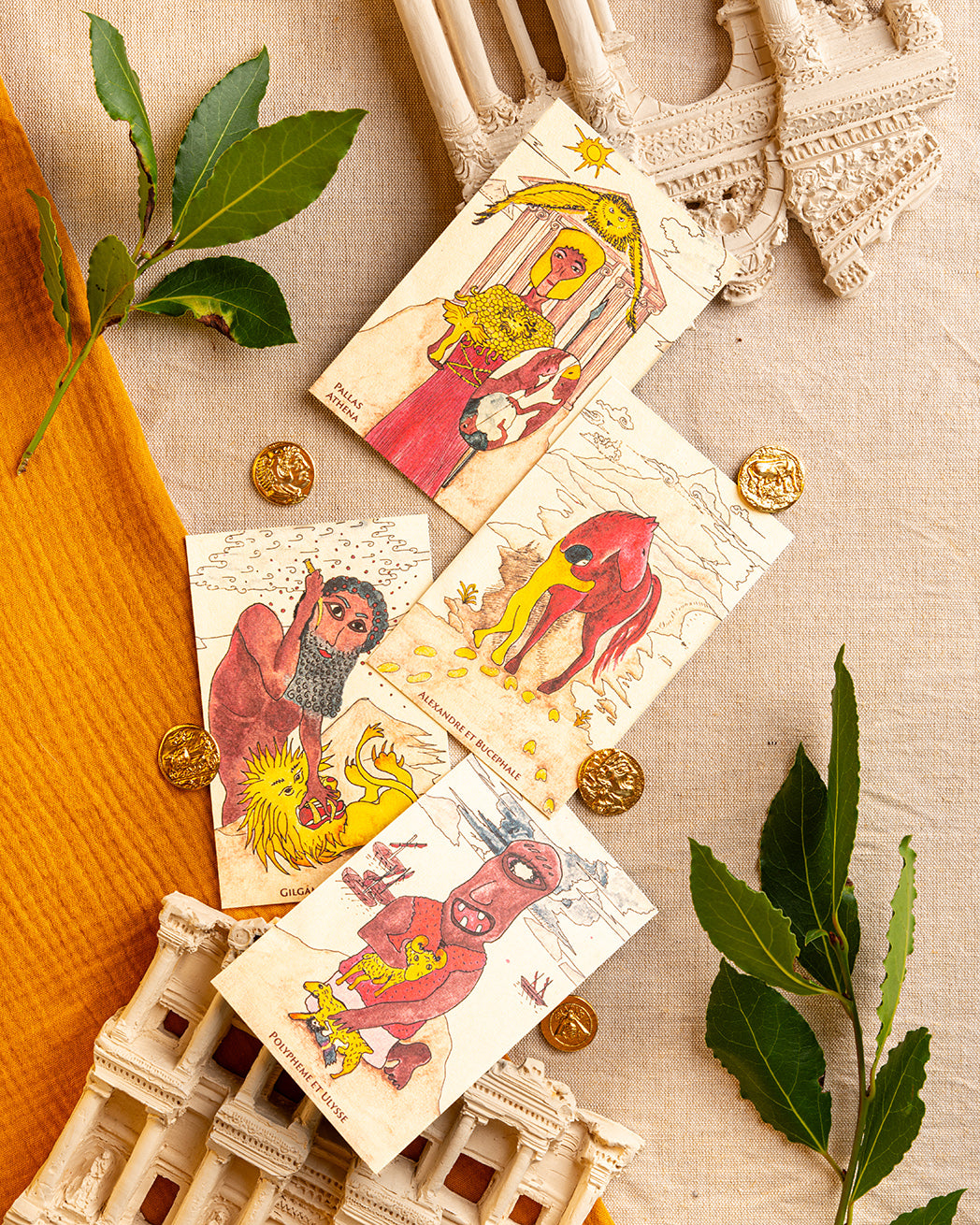
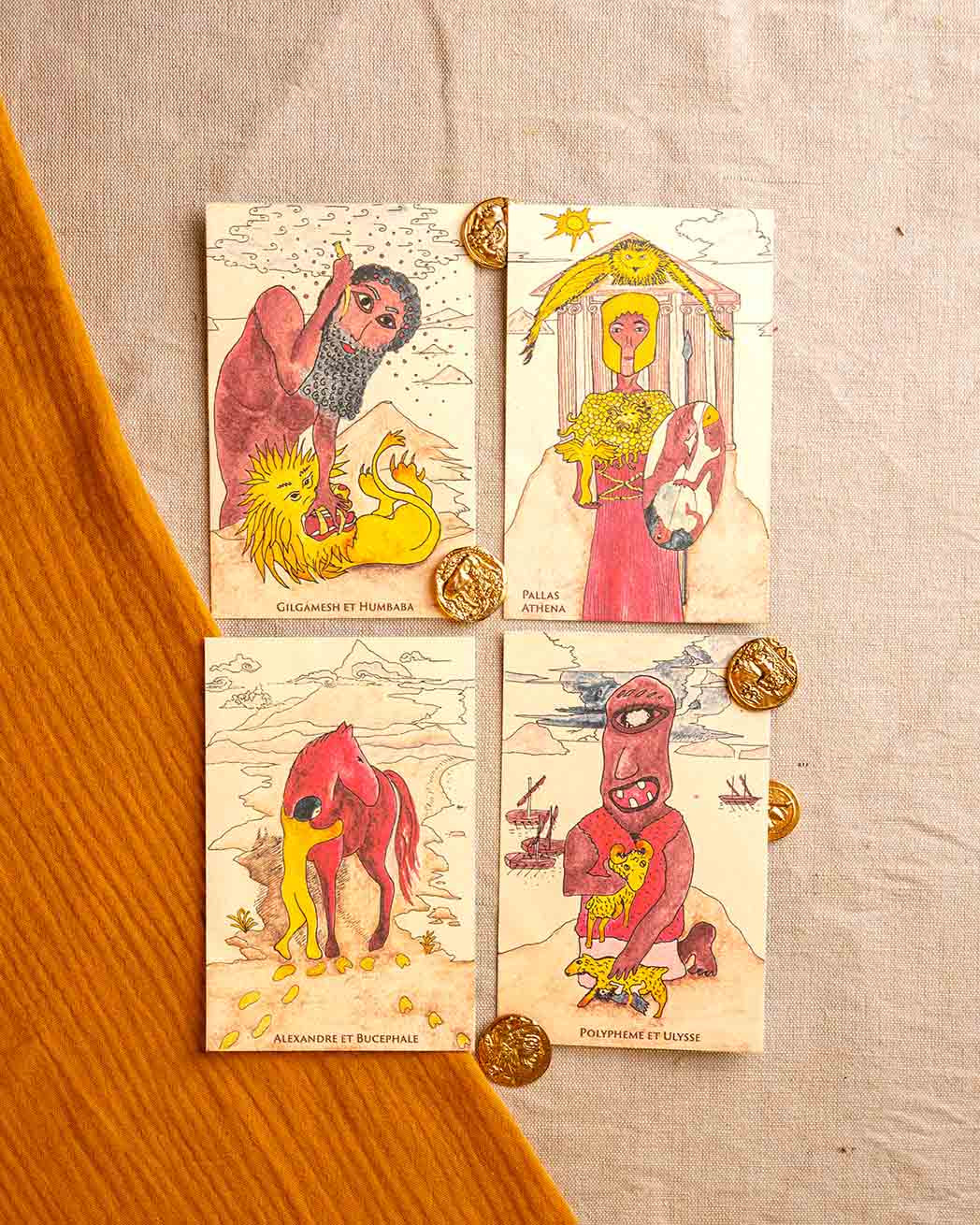
A series of artistic cards in myriorama depicting heroes, deities, and seminal episodes from ancient mythology.
Each illustration offers an open narrative: the scenes extend and recompose themselves, inviting the viewer's gaze to travel through an infinite landscape, between the Aegean Sea, the Mediterranean Sea, and mythical worlds.
The studio chose to depict inspiring figures from Antiquity, captured at the precise moment when their destiny changed.
Alexander the Great and Bucephalus
While still a child, Alexander the Great manages to approach and calm the indomitable Bucephalus.
Noticing that the horse is terrified of its own shadow, Alexander consciously adapts his approach. This encounter gives rise to a fundamental bond that will prove decisive for the course of ancient history.
This scene symbolizes mastery through intelligence, understanding of the world, and the birth of a great conqueror.
Pallas Athena
Pallas Athena, the Greek goddess of wisdom, embodies a female figure of power, independence, and justice.
Adorned with her attributes, she imposes order and balance in the world of gods and men.
After defeating the giant Pallas, she dons his skin and crushes him against the rock with the help of Heracles. Holding the statue of the goddess Nike, she symbolizes victory through intelligence and law.
This representation pays homage to Gustav Klimt's The Wonderful Athena, blending ancient art and reinvention.
Ulysses and Polyphemus
What if Ulysses had listened to his crew?
If he hadn't shouted his name to the winds after blinding Polyphemus, would he have escaped Poseidon's curse?
In this scene, the hero of the Odyssey displays his legendary cunning. Knowing that the blind cyclops would feel the fleece of his animals before letting them out, Odysseus clung to the belly of a sheep and managed to escape.
On the horizon, the sky darkened: Poseidon, Polyphemus' father, was preparing his long-awaited revenge on the Mediterranean Sea.
Gilgamesh and Humbaba
In his epic, Gilgamesh, king of Babylon, meets Enkidu, sent by the gods to curb his excesses.
Their confrontation with Humbaba, guardian of the Cedar Forest and the divine kingdom, ends with the defeat of the demonic giant, who begs for mercy.
Encouraged by Enkidu, Gilgamesh nevertheless chooses to kill him. This act will have painful consequences, but they are necessary for the Babylonian hero's evolution towards a deeper wisdom.
The position of Gilgamesh's hands echoes the Strength card in the Tarot of Marseille: man masters the animal creature through consciousness and will.
Features
Art prints on 290 gsm Hahnemühle hemp paper accompanied by a paper envelope, perfect for gift giving.
Available individually
Large format: 5.8 × 8.2 inches
Small format: 4 × 5.9 inches
Handcrafted edition
Set of 4 handcrafted, laminated cards
Illustrated back + custom illumination
Starting at €75 for a set of 4 handmade cards measuring 8.6x13.3cm (adjustable size)
👉 Please contact me for this special edition.
Share